East Texas Naturalist Blog

Information and photographs mainly about nature in east Texas. Our authors have widely diverse backgrounds and write on a variety of topics.

If you write about nature in east Texas and would like to join us here, please contact us.

Living on the Edge...Wild Times Abound in Autumn!

Living on the edge of the woods here in east Texas, I have a hard time deciding which season of the year is my favorite.  We do experience four seasons, although winter is mild and fairly brief.  Much has transpired in our backyard these past couple months, partly because of the onset of autumn, but also due to a severe drought in September and October.  We keep birdbaths of several different sizes filled and cleaned daily, and have marvelled at the vast array of wildlife that frequent our backyard watering holes.  Thankfully, the rains returned in late October, burn bans have been lifted, and still the glorious rains come!

The does and fawn have visited daily for months.  We have watched the fawn grow, lose her spots, and gain independence.  Almost on cue, by October 30, the deer disappeared, hiding out and moving cautiously beyond the woods edge.  We are in the thick of deer hunting season, and don't they know it!  I do see them sometimes now in early morning.  They enjoy the apples and carrots that we leave for them on the ground a short distance into the woods, where they are still visible to the naked eye.  Sadly, we are not invited to their night time feeding parties here on our property.  Several mornings, I have observed their party leftovers, though - a gorging of potato vine near our mailbox, with just a few severely pruned vine branches left, and rose bush branches nibbled half way to the stem.  I can almost hear them chuckling and snickering as they gallop triumphantly back into their hiding places as dawn approaches.  We chuckle to ourselves upon the discovery and admit that survivorship should have its rewards.

So, the sun continues its southerly course in the autumn sky, and our shorter days and chillier mornings and evenings change the behaviors of our backyard visitors.  Easiest to observe, are the habit changes of the many birds.  The juveniles are grown now.  We said goodbye to our hummingbird population in October, as they headed south for their winter vacation in the more tropical latitudes.  We saw a nice sized number of cardinal and mockingbird fledglings this past summer, and they continue to thrive.  Thanks to their numbers, and their seeming satisfaction with our backyard habitat, we have seen some remarkable behaviors.  The ever-blooming red azalea bushes just outside our kitchen windows are ablaze in scarlet color ever since the life giving rains began in October.  What I originally thought was preening and bathing going on within the azalea leaves, turned out to be something I was not prepared to observe.  The cardinals, both male and female, were eating the red azalea blooms.  At first, I thought maybe they were just drinking from the flower centers, or perhaps enjoying the nectar, but as I watched from the window, I saw them eating entire blossoms - every last bit!

Continue reading
Rate this blog entry:
6
Recent comment in this post
Kristi Mears Thomas
Love this, Jill! So interesting about birds eating blooms...have never heard of this! Thank you!
Wednesday, 25 November 2015 06:08
2651 Hits
1 Comment

"Bird of Prey" - the Osprey!

untitled
untitled 9891


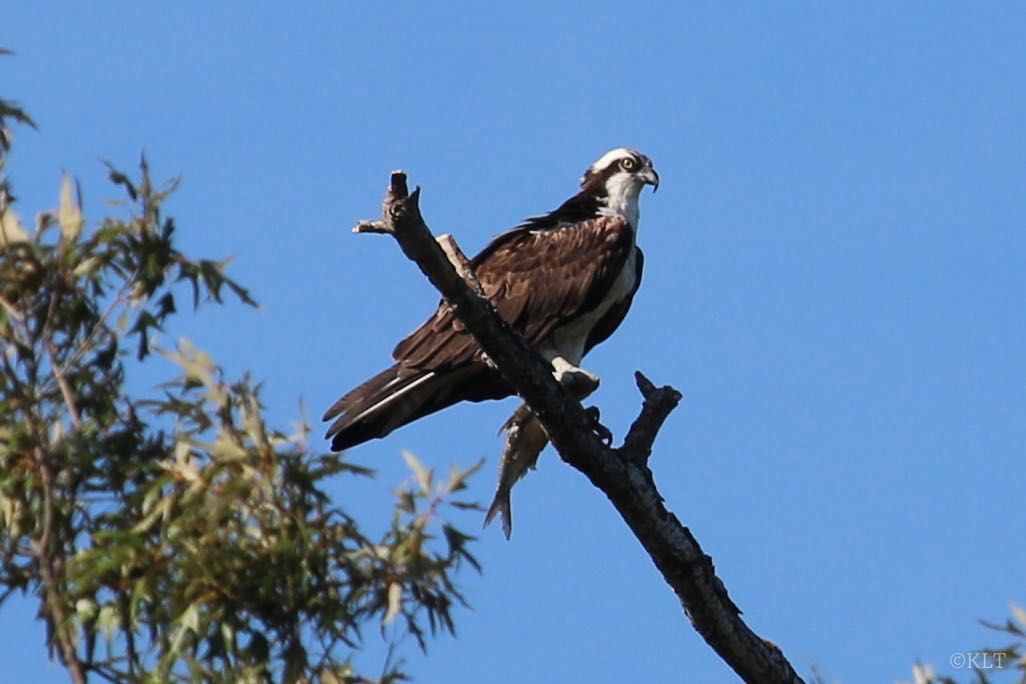
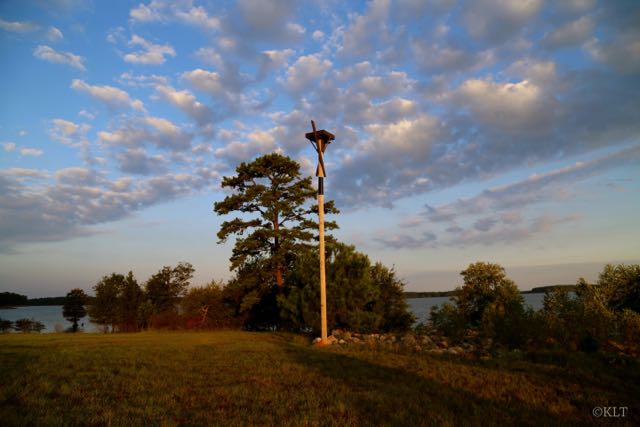
Almost every time we are out on Lake O' the Pines, we will see at least one Osprey (Pandion haliaetus), and until this past year I couldn't tell you much about them.  They are truly beautiful raptors in a distinct kind of way;  I love to see them hovering over the water with head down, wings beating fiercely, hunting for that next meal.  Others must realize their  important place in our ecosystem, because the Corps of Engineers has sponsored a project to erect several platforms at different areas of the lake, in hopes that they will be used by Ospreys to nest on.  

Continue reading
Rate this blog entry:
6
Recent comment in this post
Jill Wright
I can't believe I missed commenting on your osprey blog, Kristi! Wonderful information about this bird of prey!! They might be s... Read More
Sunday, 31 January 2016 20:26
2989 Hits
1 Comment

Enlightenment, and a Pied-billed Grebe...

Pied billed grebe3

This time last year, I could not tell you what this nondescript little brown duck swimming past our boat was.  I remember the first time I really noticed and photographed one, and how I had no idea how to start looking for what it might be in my newly acquired Peterson's Field Guide to Birds.  

Had it not been for a chance encounter last year, I wouldn't own the field guide, and I might not even know what I was missing.  One Saturday morning, after a rainy night, I noticed that the sun was peeking through the clouds and I headed to Lakeside Park beach area with my camera.  I do this when I have time, as it's close and visibility across the lake is good.  Even though the park area on the backside of the beach is closed to drive-through traffic during the fall and winter months, it's possible to walk in and enjoy, many times without seeing another human soul - just deer and birds and other wildlife!

This particular day, I noticed as I was coming across the dam that there were vehicles and people all around the beach area, setting up spotting scopes and cameras on tripods.  I wandered over to the lady closest to me and she explained that they were on a field trip with NETFO, which stands for Northeast Texas Field Ornithologists.  She shared her scope and introduced me to the other members.  They had special access to the back side of the area for the day, and allowed me to tag along through the park, look through their scopes and binoculars (I didn't yet own a pair), and didn't even shush me when I interrupted their listening for birds by speaking both too loudly and too frequently.  (This I only realized later, in one of those "ah-ha" moments that can come after you've learned just a little more!)  

Continue reading
Tags:
Rate this blog entry:
5
2541 Hits
0 Comments

Bald Eagle Population Seems to Soar at Lake O' the Pines

Immature Bald Eagle2

I'm going to qualify the statement that titles this entry by saying that I've not yet had an opportunity to participate in an eagle count at Lake O' the Pines, although I've watched them here for several years.  I always have an eye peeled and my camera ready when we go on the lake, and while there are so many interesting life forms to see, there is no doubt that the bald eagle is one of the most impressive.  I believe our fascination may be two-pronged; not only is the eagle our national emblem, but this bird has only been off the endangered species list since 2007!

We've seen an abundance of young birds this year; they are more difficult to identify because they do not sport the white (bald) head, but their brown feathers are marbled with white.  At a closer look, though, there is no mistaking the distinctive hooked beak, large head, and a way of soaring with broad wings out flat just like a board!  We've watched them enough to notice a playful and energetic quality among the younger birds, and it is fascinating to see!

I've taken so many photos this year that I felt it necessary to do some research.  According to eBird, the terms "juvenile" and "immature" are often used interchangeably, but there is a difference.  A juvenile is a very young bird that is still wearing the set of feathers it fledged with.  As soon as it goes through its first molt, it's considered an immature until it reaches breeding maturity, which is at about four to five years of age.  

Continue reading
Rate this blog entry:
6
Recent comment in this post
Michael Mathews
I am so glad you have joined us here. I look forward to more articles and, of course, your beautiful photographs.
Monday, 02 November 2015 19:11
3848 Hits
1 Comment

Yakety Yak - Don't Talk Back, Mockingbird

Mockingbird011216close

Just a quick note this morning but I had to share it.

As usual, I started my day on my steps looking out over the lake watching the morning come alive; listening to the birds call; watching the egrets glide along the water looking for a place to feed; enjoying the cool air; and sipping my coffee.

There is a mockingbird that will sometimes land on my knee or on the little table next to me when I am sitting in my big chair by the feeders, especially if I have a bowl of mealworms. Today, he came and landed on one of the shepherds hooks and made some unusual calls. Then I made the little clucking sound that I make anytime the birds or squirrels come around. It is meant to be an identifying sound so they I am there (they don’t always notice me if I am still) and that they are safe around me. I have always done that and some of them respond to it – the squirrels will come get food; the birds just pose for me in a way.

Continue reading
Tags:
Rate this blog entry:
9
2624 Hits
0 Comments